Dover: 302-674-4305

Rehoboth Beach: 302-226-1919

Ocean City: 410-213-8700

Maryland Paid Family and Medical Leave: What Employers Need to Know and When to Act

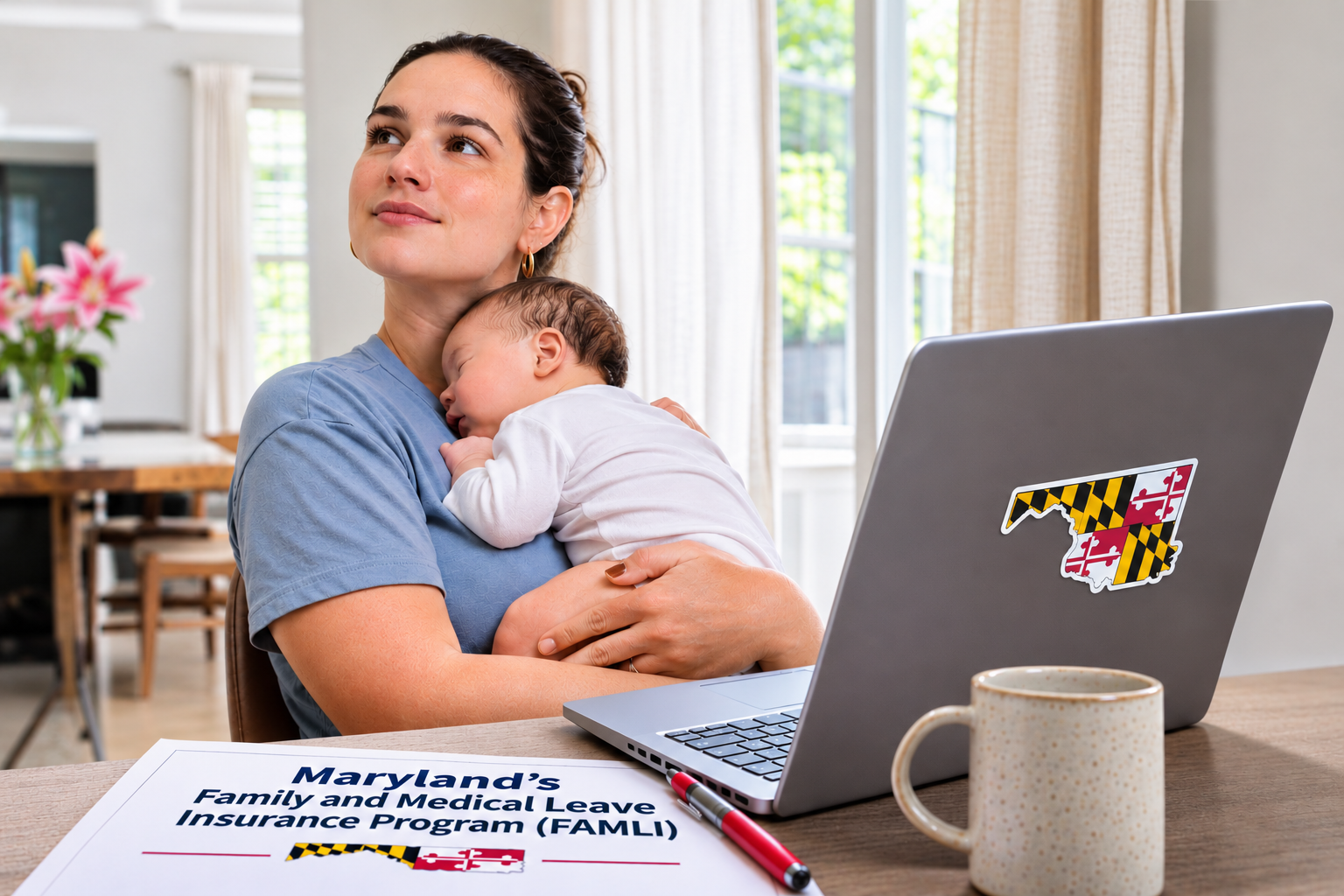
A Maryland mother cradles her sleeping baby while sitting at a laptop, illustrating how Maryland’s Family and Medical Leave Insurance (FAMLI) program will support eligible employees balancing work, family responsibilities, and medical needs.
By Hilari Auxer, CPA

Supervisor | Faw Casson

A Maryland mother cradles her sleeping baby while sitting at a laptop, illustrating how Maryland’s Family and Medical Leave Insurance (FAMLI) program will support eligible employees balancing work, family responsibilities, and medical needs.Maryland’s Paid Family and Medical Leave Insurance (FAMLI) program is moving closer to implementation, bringing new payroll requirements, reporting responsibilities, and employee leave benefits to businesses with employees working in the state.

Although employees will not begin receiving benefits until January 2028, employers have important deadlines beginning in fall 2026, with payroll contributions starting January 1, 2027. Whether your business has two employees or 200, understanding the requirements now can help you avoid last-minute payroll changes and compliance headaches.

Here’s what Maryland employers need to know, including who must participate, how much it will cost, and what steps to take before the program begins.

What Is Maryland’s Paid Family and Medical Leave Program?

Maryland’s FAMLI program provides eligible employees with partial wage replacement when they need time away from work for certain family or medical reasons. Qualifying circumstances include an employee’s own serious health condition, caring for a family member with a serious health condition, bonding with a new child following birth, adoption, foster placement, or qualifying kinship placement, and certain circumstances involving a family member’s military deployment.

The program generally provides up to 12 weeks of paid leave during a 12-month period. Employees experiencing both their own serious health condition and the arrival of a new child during the same year may qualify for up to 24 weeks. FAMLI is separate from the federal Family and Medical Leave Act (FMLA), although qualifying leave under both programs generally runs concurrently.

When Does Maryland Paid Leave Take Effect?

Maryland originally planned to implement the program several years earlier, but the timeline has been postponed multiple times. Under the current implementation schedule, employers will be required to begin funding the program in 2027, with benefits becoming available in January 2028.

Important Dates for Maryland Employers

Date What Employers Need to Know
Fall 2026 Online employer registration is scheduled to open.
September 1–November 15, 2026 Employers considering a private plan may submit a Declaration of Intent.
Before January 1, 2027 Employers must notify employees at least one pay period before deductions begin.
January 1, 2027 Payroll deductions and employer contributions begin for wages paid after this date.
April 30, 2027 First quarterly contribution payment is due.
July 2027 Additional employee notification requirements begin.
January 2028 Eligible employees can begin receiving paid leave benefits.

The key takeaway: Even though paid leave benefits are still more than a year away, employers need to prepare their payroll systems and employee communications before January 2027.

Which Employers Must Participate?

Generally, any business with at least one employee working in Maryland must participate in FAMLI. This includes small businesses, and the requirements are not limited to full-time employees. Part-time, seasonal, and temporary employees may also be covered.

One important distinction is that coverage generally depends on where employees work, not where they live or where the business is headquartered. For example, a Delaware business with an employee who works remotely from their Maryland home would generally be required to participate for that employee. Conversely, a Maryland resident who works entirely in Delaware would generally not be covered.

Businesses with employees working in multiple states should review where each position is localized. Maryland unemployment insurance reporting can help determine whether an employee falls under the program. Independent contractors, self-employed individuals and federal employees are excluded and not currently required to participate.

How Much Will Maryland Paid Leave Cost Employers?

Beginning January 1, 2027, the total contribution rate under Maryland’s State Plan will be 0.9% of covered wages, up to the annual Social Security wage cap. For most covered employers, the contribution is shared between the business and its employees, with employers permitted to withhold up to half of the total contribution from employee paychecks.

At the current rate, the employer and employee portions are each 0.45% of covered wages. Employers may choose to cover some or all of the employee’s share rather than deducting it from their paycheck, however, doing so will potentially have federal and other tax consequences.

What Does That Look Like in Dollars?

Consider an employee earning $60,000 annually, assuming all wages are subject to FAMLI contributions.

Employee portion Employer portion Annual Amount
$270 $270 $540

Special Rules for Small Employers

Maryland provides reduced contribution requirements for smaller businesses. Current program guidance generally defines a small employer as having fewer than 15 employees, counting employees both inside and outside Maryland. Under this rule, small employers are responsible for remitting only 0.45% of covered wages and may withhold that entire amount from employees.

For example, a qualifying small employer with an employee earning $60,000 could withhold the full $270 annual contribution from that employee without being required to contribute an additional employer share.

Employer size is determined using employee counts across the business, including employees outside Maryland and employees working under the same federal Employer Identification Number (EIN). Independent contractors are excluded. During 2027, employer size will be determined quarterly. Beginning in 2028, employer size will be determined using average employee count over the previous four quarters.

What Are the Payroll Reporting and Payment Requirements?

Beginning in 2027, employers must collect applicable employee contributions when wages are paid and submit required contributions electronically each quarter. Maryland will use a separate FAMLI reporting system rather than its existing unemployment insurance BEACON system.

Employers must also submit quarterly wage-and-hour reports, including those using approved private plans. Reports remain required even when an employee has no wages for the quarter, although no contribution is due for that employee.

Quarterly Contribution Deadlines

Reporting period Payment deadline
January–March April 30
April–June July 31
July–September October 31
October–December January 31 of the following year

The first contribution payment is due April 30, 2027. Employers should make sure their payroll systems are configured to calculate contributions correctly from the beginning because, generally, if an employer fails to withhold the required employee contribution during a pay cycle, the missed amount cannot simply be deducted from a later paycheck. A limited exception applies when an employee does not earn enough during the pay cycle to cover the contribution.

Can Employers Use a Private Paid Leave Plan Instead?

Yes. Maryland allows employers to use an approved private plan instead of participating in the State Plan. Private plans may be offered through a commercial insurance provider or, for qualifying employers, through self-insurance. To qualify, a private plan must provide benefits and employee protections at least as favorable as those offered through the State Plan.

Employers of any size may apply for a commercial private plan. Self-insurance is generally available to employers with at least 50 employees, although certain smaller employers with compliant plans already in place by July 31, 2026, may also qualify.

Employers considering a private plan should pay particular attention to November 15, 2026. The Declaration of Intent window runs from September 1 through November 15, 2026, with private-plan applications expected to become available in 2027.

Employers with an accepted Declaration of Intent must hold required 2027 contributions in escrow while awaiting plan approval. How those funds are handled depends on whether the employer receives approval for a commercial or self-insured plan. Private plans also have annual application fees, and employers must continue meeting applicable reporting and recordkeeping requirements.

Because switching from a private plan back to the State Plan can create substantial retroactive contribution obligations, businesses should carefully evaluate their options before committing.

What Benefits Will Employees Receive?

Beginning in January 2028, eligible employees may receive partial wage replacement while taking qualifying leave. To qualify, employees generally must have worked at least 680 hours in a Maryland-based position during the applicable four-quarter measurement period. Those hours may come from multiple employers.

Benefits are calculated based on an employee’s wages and Maryland’s State Average Weekly Wage. The program is designed to replace up to 90% of an employee’s wages, subject to a maximum weekly benefit of $1,000. The actual percentage depends on the employee’s earnings.

There is no waiting period for benefits. The first payment will be processed within five business days of the claim’s approval or the start of leave, whichever happens later. Eligible employees may take leave continuously or intermittently. Additional provisions govern intermittent leave.

What Responsibilities Will Employers Have When Employees Take Leave?

FAMLI involves more than payroll deductions. Once benefits begin, employers will also have responsibilities related to employee notices, leave administration, and job protection.

For foreseeable leave, employers may require employees to provide 30 days advance notice. When leave is unexpected, employees must provide notice as soon as practical. When an employee files a claim under the State Plan, the employer receives an electronic notification and generally has five business days to respond. Private plan administrators handle initial claims and benefits, but the State will handle all appeals for both State and private plans.

Employers must also provide certain job protections, including returning employees to the same or an equivalent position following qualifying leave and continuing health benefits during the leave period.

How Does FAMLI Affect Existing PTO and Leave Policies?

Employers cannot require employees to exhaust their ordinary paid time off before receiving FAMLI benefits. However, employees may voluntarily use accrued paid leave to supplement FAMLI benefits, up to 100% of their regular wages.

Certain employer-provided parental or similar leave policies may be required to run concurrently with FAMLI, and qualifying leave under the federal FMLA should generally run at the same time. Employers should review existing leave policies before benefits begin to understand how these programs will interact.

What Should Maryland Employers Do Now?

With payroll contributions approaching, businesses should use the remaining months of 2026 to prepare. The most immediate priorities are identifying covered employees, determining contribution responsibilities, and making sure payroll systems are ready for January 2027.

Employer Preparation Checklist

Before January 1, 2027

Identify covered employees. Review where employees physically work, particularly remote employees and those working across state lines.

  • Determine employer size. Count employees across all locations under the same EIN to determine the applicable contribution responsibility.
  • Evaluate State Plan versus private-plan options. If considering a private plan, review the November 15, 2026 Declaration of Intent deadline.
  • Prepare for registration. Watch for Maryland’s online employer registration opening in fall 2026.
  • Coordinate with your payroll provider. Confirm that FAMLI contributions can be calculated and withheld beginning January 1, 2027.
  • Notify employees. Provide required information at least one pay period before deductions begin.

During 2027

  • January 1 2027 – begin collecting and remitting contributions on covered wages.
  • Submit required quarterly wage-and-hour reports.
  • Make the first quarterly contribution payment by April 30, 2027.
  • Provide additional employee notices beginning in July 2027.
  • Review and update employee handbooks, leave policies, and internal procedures in preparation for benefits beginning in 2028.

The Bottom Line for Businesses

Maryland’s Paid Family and Medical Leave Insurance program introduces new responsibilities for businesses of nearly every size, including employers headquartered outside Maryland that have employees working in the state.

While employees will not begin receiving benefits until January 2028, the first major employer deadline is approaching in 2026, and payroll contributions begin January 1, 2027. Businesses that prepare early will be better positioned to handle payroll changes, employee questions, and future leave requests without unnecessary disruption.

If your business has employees working in Maryland, now is the time to review your workforce, evaluate your payroll processes, and determine how FAMLI will affect your operations.

This article reflects Maryland FAMLI program information available as of October 26, 2026. Employers should monitor Maryland Department of Labor announcements for registration details, program updates, and additional implementation guidance.